
Participatory Design and ASD
| Focus | Participatory software development and inclusive design |
| Research partner | University College Dublin, International Society for Autism Research (INSAR) |
| Researcher | Dr Yurgos Politis |
| Technology organisation | Hao2.eu and 3DNovations, HIVE-RD |
| Participants | 15 testers |
| Autistic participants | Eight |
| Technology | Collaborative multi-user 3D virtual environment: R&D.Construct |
| Development activities | User testing, stress testing, networking, usability development and iterative software improvement |
| Participant contributions | Camera controls, communication tools, user guidance, avatar customisation and development priorities |
| Research areas | Autism, participatory design, accessibility, software development and virtual environments |
| Peer reviewed output | ‘Empowering people with Autism through their involvement in the development of a Virtual World’ Advances in Autism, (Politis, Olivia & Olivia, 2019) |
https://www.emerald.com/insight/content/doi/10.1108/AIA-01-2019-0001/full/html
Autistic adults contributing directly to the development of a collaborative virtual world
3DNovations and Hao2.eu worked with researchers from University College Dublin to investigate how autistic adults could participate directly in the development of a collaborative 3D virtual environment.
Rather than developing the technology first and asking autistic users to evaluate the finished product, participants were involved while the platform was still being built.
Their experiences, observations and requests were fed back into the development process and used to identify faults, improve usability and influence future development priorities.
The work was subsequently documented in peer reviewed research examining how autistic adults could participate meaningfully in the development of technology intended for autistic users.
The challenge
Technology designed for disabled or neurodivergent people can fail when assumptions about users replace direct involvement from the people expected to use it.
This is particularly important in complex interactive environments.
Features that appear straightforward to a developer may create unexpected difficulties for another user. Navigation, camera movement, communication tools, instructions, avatars and other apparently small design choices can determine whether someone can use a system comfortably and independently.
The project therefore explored a different development model.
Autistic adults would not simply be research subjects or recipients of the finished technology.
They would use the developing platform, identify issues and contribute to decisions about how it should change.
Building the virtual environment
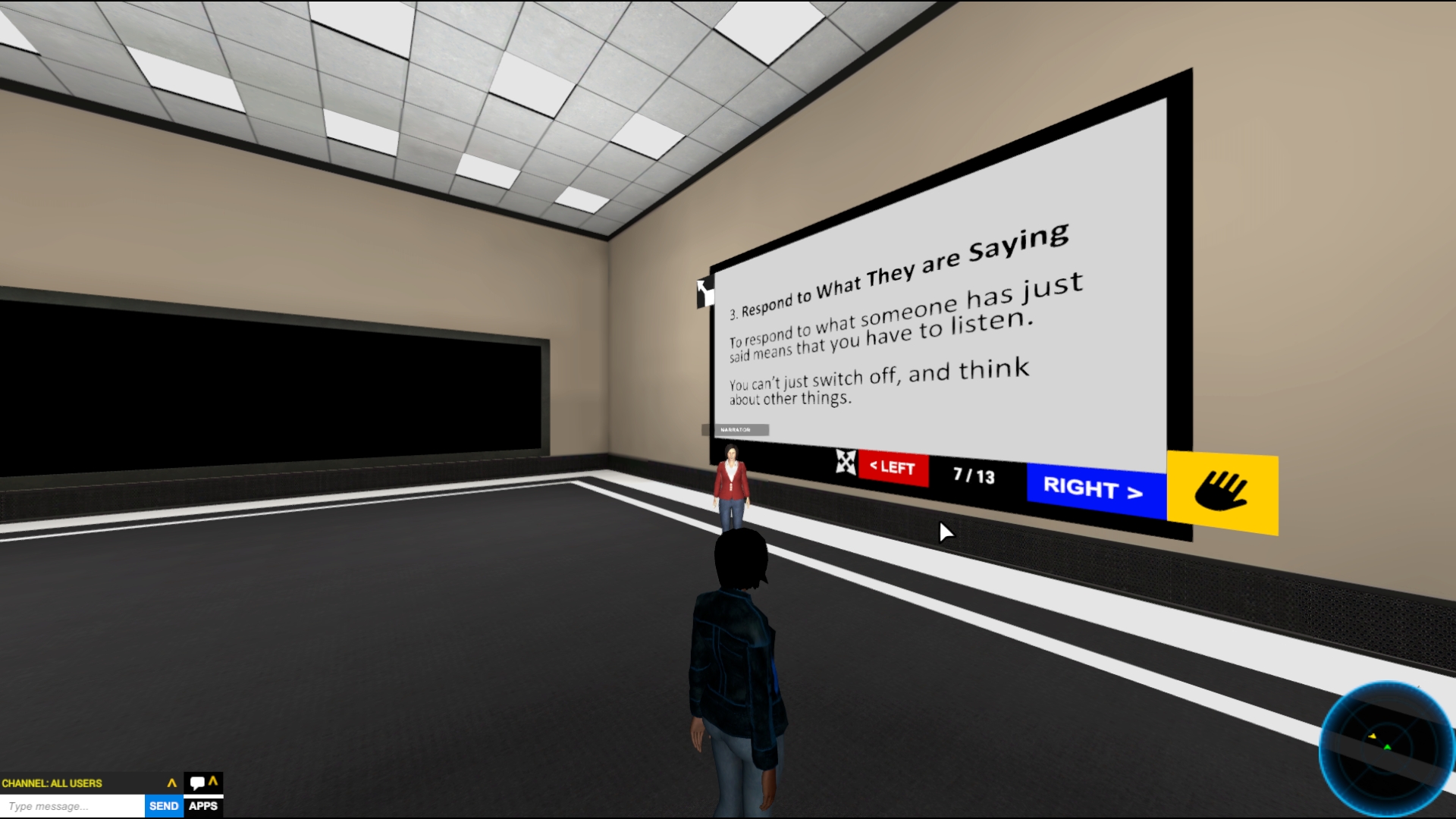
The project centred on development of a collaborative 3D virtual world that could later support activities including learning, communication and skills development.
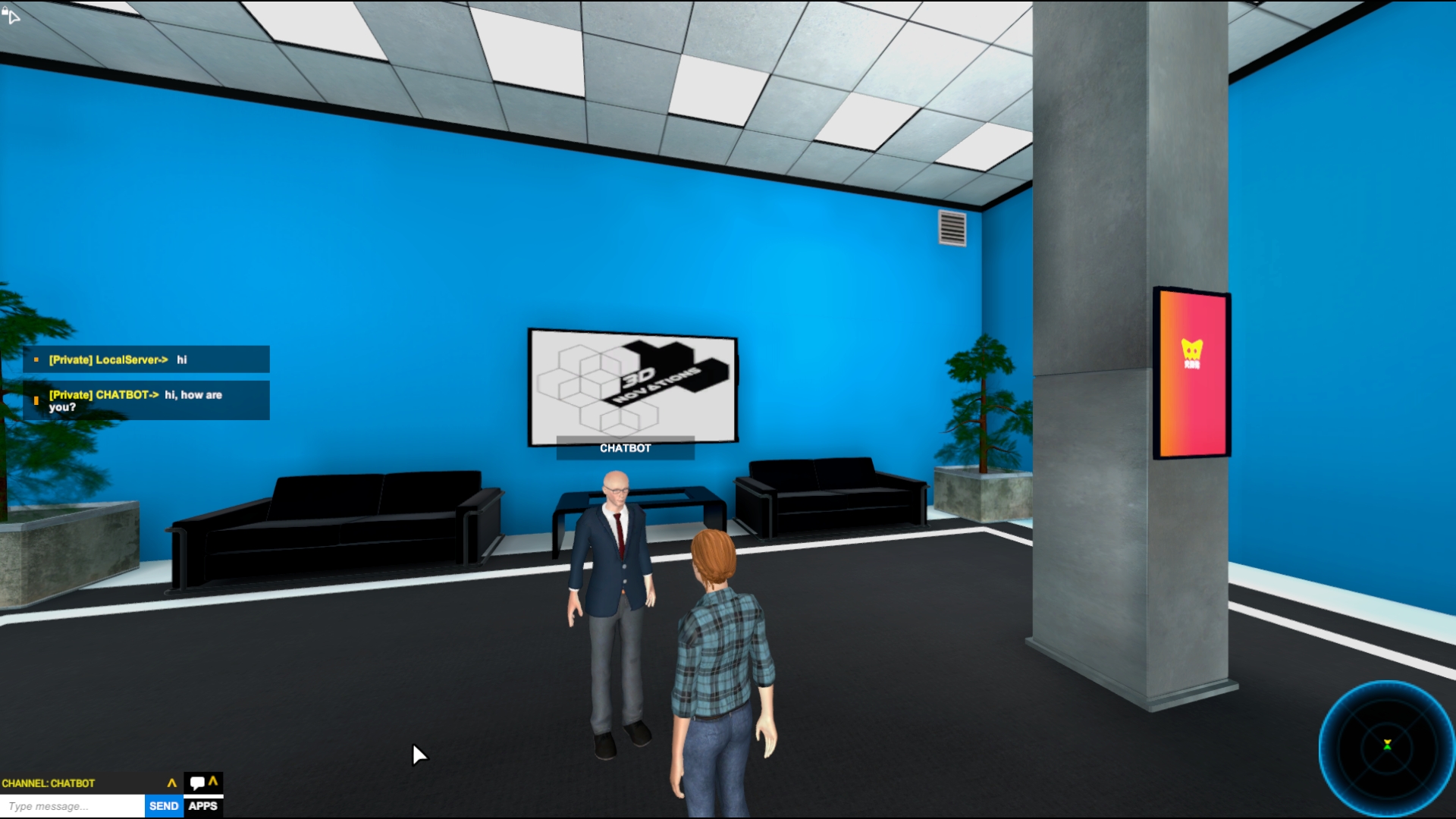
Users entered the environment through avatars and could move around shared digital spaces, interact with other people and use communication tools within the platform.
Creating a functioning multi-user environment also required development of the underlying networking systems so that participants could enter the same space and interact in real time.
The platform was developed iteratively, allowing testing and technical development to take place alongside one another.
Testing with autistic users
The research involved a mixed testing group of 15 participants, including eight autistic adults.
Participants were asked to use and stress test different aspects of the virtual environment.
Testing was not restricted to whether individual buttons or features technically worked.
Participants used the environment together, encountered the platform as actual users and identified practical issues that might not have been obvious during internal development.
Researchers and developers could then observe problems, collect feedback and decide how the platform should be changed.
This created an iterative cycle in which development informed testing and testing informed further development.
Turning feedback into development decisions
Participant involvement resulted in specific changes and development priorities.
Users identified problems with camera controls, including difficulties controlling how they viewed and navigated the environment.
Issues were also identified with the chat system, including errors affecting communication between users.
Participants requested clearer support material, including both written and video instructions, so that different users could choose the form of guidance that worked best for them.
They also asked for greater avatar customisation, allowing users more control over how they represented themselves within the virtual environment.
Issues identified during testing were either addressed directly or recorded within the development roadmap for subsequent work.
This meant participant feedback had a practical route into software development rather than being collected solely for research purposes.
Working directly with the development team
A significant element of the project was the relationship between participants, researchers and software developers.
The technical development team could respond to issues identified during testing and examine whether changes were technically feasible.
Researchers could investigate how participants experienced the technology and structure the process through which feedback was gathered.
Participants contributed knowledge that neither group could provide independently: direct experience of using the system from the perspective of the intended user community.
This combination made the development process more than a conventional usability test.
Participants could influence both immediate corrections and longer term development priorities.
Designing for different users
The testing also demonstrated why accessibility cannot be reduced to a single set of assumptions about autistic people.
Participants did not all experience the environment in the same way.
A feature that caused difficulty for one person might not cause difficulty for another. Users could also have different preferences concerning instructions, communication, navigation and representation within the environment.
This reinforced the importance of flexibility.
Rather than attempting to create one supposedly ideal interface for an autistic user, the development process increasingly considered how users could be given choices over how they interacted with the platform.
Participation rather than consultation
One of the important distinctions explored by the research was the difference between asking users for opinions and involving them in development.
A conventional consultation might take place after most significant design decisions have already been made.
In this project, testing took place during development.
That allowed participants to identify problems while there was still an opportunity to change the platform.
Their contribution therefore had a direct relationship with technical decisions.
The process demonstrated how participatory development can improve both the technology and the evidence available to the development team about how people actually use it.
What the project found
The research demonstrated that autistic adults could contribute effectively to the technical development of a collaborative virtual environment.
Their involvement identified practical usability issues, generated requests for additional functionality and influenced the development roadmap.
The process also highlighted some of the challenges involved in meaningful participatory design.
Different participants could have different communication preferences, levels of technical confidence and support requirements.
Meaningful involvement therefore required more than simply inviting people to a testing session.
The development and research process needed to accommodate different ways of communicating and participating while still ensuring that feedback could be translated into practical technical decisions.
From user feedback to a better platform
The project showed how seemingly small pieces of feedback could have wider implications.
A request for better instructions was not simply a documentation issue. It raised questions about how independently users could learn to use the platform.
Problems with camera controls affected navigation and therefore the usability of the entire environment.
Requests for avatar customisation concerned not only appearance but also how users represented themselves and experienced their identity within a shared digital space.
Problems with chat affected one of the principal ways users could communicate with each other.
By involving participants during development, these issues could be considered as part of the platform architecture and user experience rather than being treated as complaints about a finished product.
Research output
The work was documented in the peer reviewed paper:
Empowering autistic adults through their involvement in the development of a virtual world, published in Advances in Autism in 2019.
The research examined the practical experience of involving autistic adults in development and considered both the benefits and challenges of working with a neurodiverse participant group as active contributors to technology development.
The publication provides an independent academic record of the participatory development process used during the project.
Project impact
Participatory design is now widely discussed within research and innovation programmes, particularly where technologies are intended for groups whose requirements may not be well represented within conventional product development.
This project provides practical evidence of 3DNovations and Hao2.eu applying that principle during software development.
Autistic adults were involved while the platform was still evolving.
Their feedback identified technical problems, influenced functionality and contributed to the development roadmap.
For 3DNovations, the project demonstrates experience of bringing together software development, academic research and user participation within the same development process.
That approach continues to inform work in which technology must respond to the requirements of real users rather than assumptions made on their behalf.
Historical note
This work was undertaken through Hao2.eu before the incorporation of the present 3DNovations Limited in Scotland.
The platform, development experience and personnel involved form part of the technical and research history from which the present 3DNovations business developed.