
Metanoia Pilot Project: Testing an accessible virtual counselling model with Metanoia Institute, Autus and A2ndVoice
| Period | 2022 to 2023 |
| Funder | British Association for Counselling and Psychotherapy |
| Grant | £30,000 to Metanoia Institute |
| Partners | Metanoia Institute, Autus, 3DNovations and A2ndVoice |
| Focus | Accessible counselling using avatars and a 3D virtual environment |
In 2022, 3DNovations joined Metanoia Institute, Autus and A2ndVoice in a pilot exploring whether counselling delivered through personalised avatars in a collaborative 3D environment could reduce barriers to therapy for autistic adults from minority ethnic backgrounds.
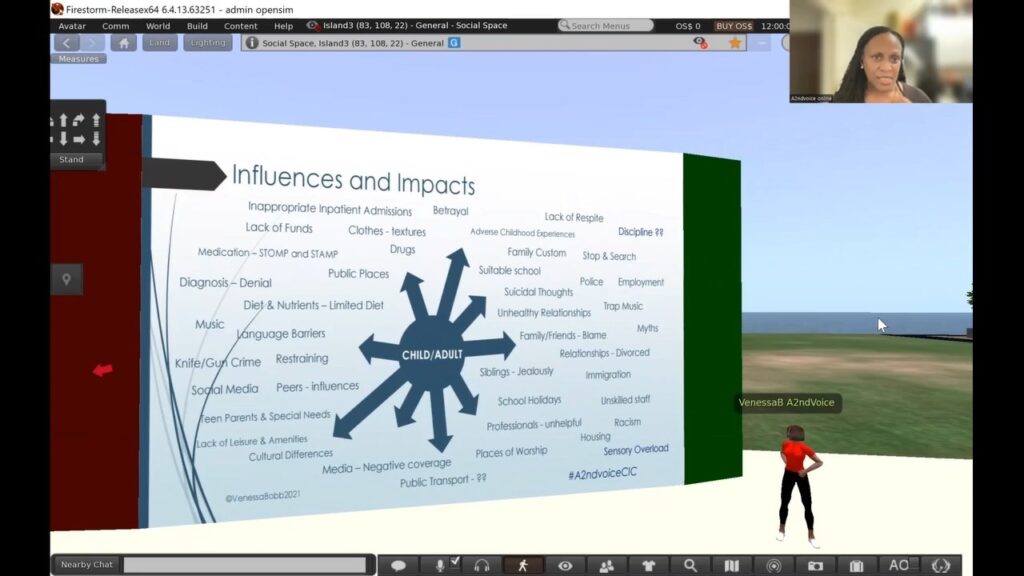
The project received £30,000 from the British Association for Counselling and Psychotherapy Equality, Diversity and Inclusion Grant Scheme and ran from 1 May 2022 to 30 April 2023.
https://www.bacp.co.uk/media/21096/bacp-edi-third-sector-grants-pilot-scheme-report.pdf
3DNovations provided the digital platform and 3D virtual environment used to deliver the intervention. The platform had been researched and developed with Autus and autistic users using inclusive design principles.
Dr Ariana Jordan presented this project at the Metanoia Research Academy on 24 February 2023, under the title Reducing Stigma: Using Avatars in Counselling with Autistic Adults from Black and Ethnic Minority Backgrounds:
The challenge
Accessing counselling can involve barriers beyond the availability of a therapist.
For autistic people, unfamiliar environments, face to face interaction, sensory demands and conventional communication expectations can make engagement more difficult. Cultural attitudes towards mental health can create additional barriers for people from minority ethnic communities.
The project therefore explored whether an alternative form of counselling could provide participants with greater control over how and where therapeutic conversations took place.
Rather than requiring clients and therapists to meet physically or communicate through conventional video calls, the project tested counselling within a shared virtual environment using personalised avatars.
The partnership
The pilot brought together four organisations with complementary expertise.
Metanoia Institute provided counselling, psychotherapy and research expertise and led the therapeutic intervention.
3DNovations provided the digital platform and 3D virtual environment through which counselling was delivered.
Autus contributed its experience of working with autistic people and had previously worked with autistic users in the inclusive design of the platform.
A2ndVoice contributed specialist experience of supporting autistic people and families from African, Caribbean, Asian and other minority ethnic communities.
The independent evaluation found that this combination of expertise allowed the partners to address therapeutic requirements, cultural considerations, technical training and the design of the virtual space together.
Creating the virtual counselling environment
Participants began with a taster session in the virtual world and were then supported to create a personalised avatar.
That avatar became their representation within the environment and was used when meeting their therapist.
Participants could choose their virtual surroundings and could communicate using different tools within the platform, including text chat. This gave participants greater control over aspects of the environment and their level of verbal interaction.
Therapists also received training to ensure they were comfortable navigating the virtual world and supporting clients within it.
The development process considered not only the technical environment but also cultural sensitivity, ethical approval, therapeutic requirements and how the virtual space could feel safe and appropriate for participants.
Delivering counselling through avatars
Participants who completed the programme received six individual therapy sessions within the 3D environment.
Sessions were based around individually agreed goals and could include work on confidence, self esteem, social skills and practical situations alongside therapeutic conversations.
One participant described the virtual approach as more relaxed than traditional therapy and said they would choose a virtual world over meeting in person in future. The evaluation also found that removing direct face to face interaction could reduce some of the anxiety and sensory pressures associated with attending therapy.
What the pilot found
The independent evaluation reported that participants generally had a positive experience of the avatar assisted approach.
Participants described feeling listened to and understood, while some found they could communicate more openly without the social and sensory pressures they experienced during conventional face to face or video therapy.
The ability to choose surroundings, communicate through text where appropriate and interact through an avatar gave participants greater control over how they engaged.
The evaluation also identified an interesting effect of avatar based interaction. By reducing visual information about the person behind the avatar, participants felt that some opportunities for judgement based on race or physical appearance were reduced. At the same time, participants valued being able to select avatars that reflected their identity, including skin tone.
Participants reported developing a better understanding of their emotions and learning techniques relating to self regulation and coping. Therapists also reported improvements in participant confidence and the ability to apply some of the skills developed during therapy to everyday situations.
A small scale feasibility pilot
The project was deliberately exploratory and the participant numbers were small.
Seven people were referred to the pilot and five completed the full programme of support, below the original target of ten participants. All five participants who completed the programme were subsequently interviewed as part of the independent evaluation.
The pilot also identified practical challenges.
Some participants initially experienced technical problems such as sound quality or difficulty locating other users within the virtual environment. Recruitment and onboarding took longer than anticipated, and obtaining ethical approval contributed to delays.
The evaluation concluded that future projects of this kind would benefit from a longer delivery period to accommodate the additional requirements associated with introducing a new therapeutic model.
Independent evaluation
The British Association for Counselling and Psychotherapy commissioned independent research organisation Wavehill to evaluate its Equality, Diversity and Inclusion Grant Scheme and the projects it funded.
The evaluation examined project implementation, participant experiences, partnership working, organisational impact and lessons for future delivery.
The final evaluation concluded that the Metanoia project had contributed to understanding how virtual worlds and avatars could help remove barriers to therapy for autistic people from racialised communities.
It also concluded that the project had established a platform capable of being used for therapeutic delivery and provided a foundation for further investigation of counselling within virtual environments.
Building capability beyond the pilot
The project produced benefits beyond the individual counselling sessions.
The evaluation found increased knowledge among participating organisations around cultural competence, the intersection of race and autism, effective co-production and the use of creative digital approaches within therapy.
Therapists developed greater confidence in working with the technology, while both therapists and participants developed digital skills through using the environment.
The partners subsequently shared learning from the pilot at national events and continued discussions about further development of avatar assisted therapy.
Project impact
The Metanoia pilot demonstrated how immersive technology can be used for more than simulation or visualisation.
In this project, the virtual environment became part of the service itself.
The work brought together technology development, therapeutic expertise, community organisations and lived experience to test an alternative way of accessing counselling.
For 3DNovations, the project provided a practical demonstration of how adaptable 3D environments can be configured around the requirements of specialist services and evaluated with the people expected to use them.
It also provided evidence of 3DNovations’ ability to work as a technology partner within a multidisciplinary research and service delivery consortium.